


News tips? Story ideas? News tips? Story ideas? Email us at sbvanvoorhis@contrarianboston.com, or sbvanvoorhis@hotmail.com
Slammed again: Looming auction of big downtown Boston office tower bad news for the city’s already struggling finances
Remote work has demolished the value of Boston office towers, which keep cops on the beat, teachers in the classroom, and librarians roaming the stacks with the taxes they pay.
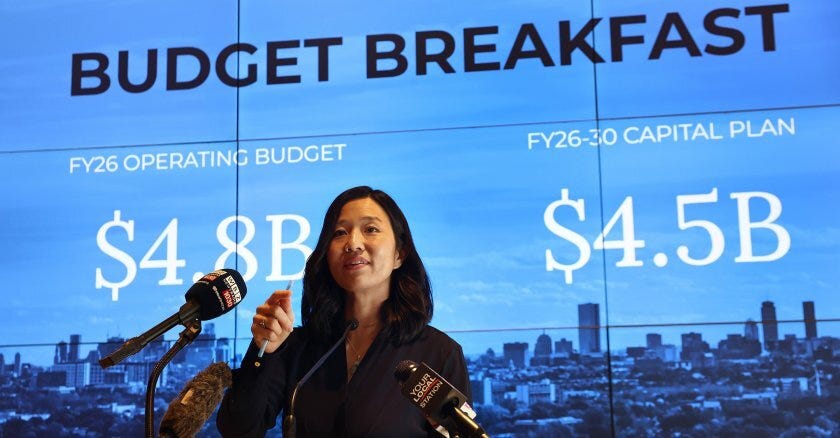
Years in the making, the catastrophic shift finally hit home this spring as Boston slashed teaching jobs, froze spending, and raided reserves to plug a nearly $100 million budget gap in city government and its schools.
The budget crisis erupted with little official warning. As she campaigned for reelection last year, Boston Mayor Michelle Wu touted the city’s economy even as she downplayed looming declines in commercial real estate tax revenue.
Now Boston’s increasingly shaky finances are about to take another hit.
When it last changed hands in 2019, the 1.3-million-square-foot 100 Summer Street office tower fetched more than $800 million.
The tower will be sold again on Oct. 20, but this time at a foreclosure auction, Banker & Tradesman first reported last week (great scoop).
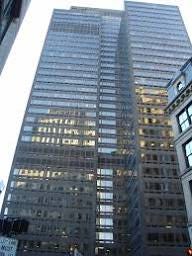
That’s bad news for the erstwhile owner, Rockpoint Group, but it’s even worse for city taxpayers, who will be forced to pick up the slack for a major downtown address that pays more than $10 million in taxes each year.
It’s just the latest downtown office high-rise to hit the auction block.
The former State Street headquarters at One Lincoln sold for just $400 million at a foreclosure auction last year. By comparison, in 2022, the 36-story tower near South Station was refinanced for $1 billion, including $200 million for renovations, according to B&T.
Last year, a Boston Policy Institute report warned the hit to Boston’s tax coffers could top $2 billion over five years as office towers and buildings sank in value.
“Assessed values for office buildings are going to keep falling,” Greg Maynard, BPI’s founder and executive director, told Contrarian Boston. “This foreclosure shows that these office buildings are simply not worth as much as they were prior to Covid.”
Don’t blame us: Worcester frat party burn victim, scorched by a 190-proof alcohol “fireball,” wages intense legal battle with Everclear-maker Luxco, WPI, and others
No one disputes the horrific tragedy that, in seconds, forever altered Yvette Digan’s life as she kicked back at a frat party next to Worcester Polytechnic Institute’s campus.
Flames fueled by a stream of 190-proof alcohol engulfed Digan as a Zeta Psi fraternity member poured a bottle of Everclear on an open flame, plunging the young exchange student from Hong Kong into a medical purgatory of multiple operations and skin grafts.
Digan had been in the country just a few days as part of a Boston University summer exchange program.

“The accident left me in the burn unit at Massachusetts General Hospital (MGH), in excruciating pain, far from home, and feeling like my dreams of exploring the world were over,” Digan recalled in a LinkedIn post thanking the “incredible doctors, nurses, and staff” at the Boston hospital.
Since that terrible spring evening in 2025, Digan and her family have filed half a dozen federal and state lawsuits against Everclear-maker Luxco, parent company MGP Ingredients, WPI, and the fraternity, seeking tens of millions in damages. The cases have generated thousands of pages of legal filings while keeping a small army of high-priced lawyers employed.
Yet despite all that expensive legal sparring, nearly 18 months later it remains an open question who, if anyone, will be held responsible for the gruesome incident, which left Digan with third-degree burns across nearly a third of her body and medical bills now approaching $1 million.
