
Serving the public or serving themselves? CEOs of quasi-public state authorities live large on the public dime, with little accountability to anyone, a Contrarian Boston investigation finds |

News tips? Story ideas? News tips? Story ideas? Email us at sbvanvoorhis@contrarianboston.com, or sbvanvoorhis@hotmail.com
State government’s fat cats: CEOs of quasi-public authorities wine, dine and travel the globe on the taxpayer’s dime while making more money than the governor, Contrarian Boston finds after an extensive probe of state records
By Colman M. Herman
The head of a Massachusetts state housing agency made nearly $400,000 last year — 1.6 times more than the governor of the commonwealth.
Meanwhile, many individuals working immediately under CEO Chrystal Kornegay are right up there on the pay scale with her.
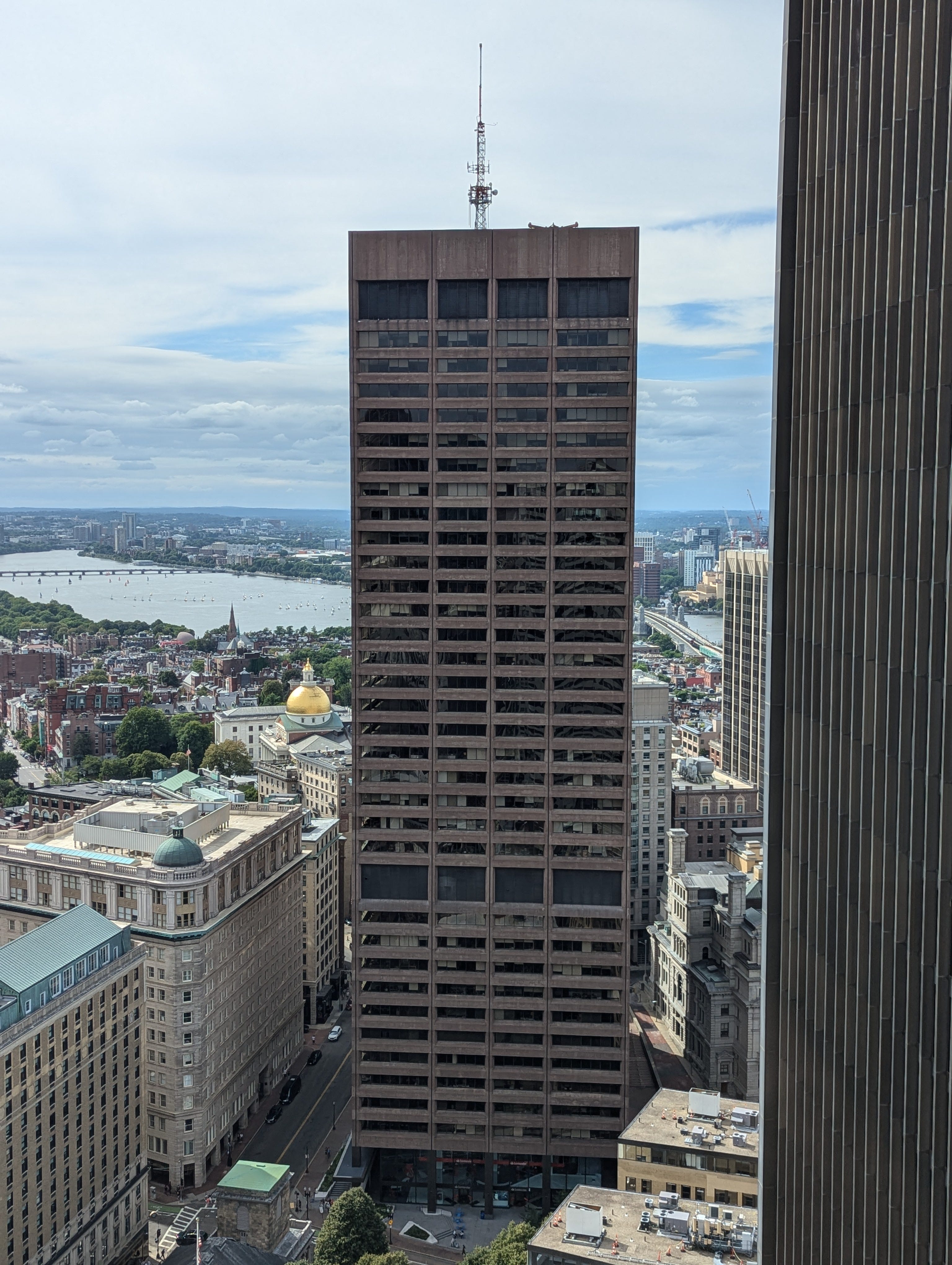
As for the agency’s downtown Boston offices high up in the One Beacon tower, they can be described best in two words — expensive and upscale.
The organization in question is the Massachusetts Housing Finance Agency, commonly called MassHousing. It is not your standard state agency like the Department of Public Health, for example, or the Department of Higher Education. MassHousing is what’s known as a quasi-public state agency (aka an authority), one of about 40 such entities that exist in the state.
The quasis operate beyond the ken of most voters. Informally referred to as the “fourth branch of government,” they function with minimal, if any, understanding, oversight, and control by elected officials and the general public.
Rather than being accountable to the public and the people they elect, the quasis are governed by boards of appointed, not elected, individuals.
But let’s be clear: The quasis are in no way private entities. Rather, they are government entities, a reality clearly borne out by the fact that they are subject to audit by the state auditor and to investigation by the state inspector general. They are also subject to the Massachusetts Public Records Law, which Contrarian Boston used to access thousands of pages of documents for this story, covering the period from January to December 2025.
The documents reveal that the CEOs of the state’s quasis pull down salaries well above their counterparts in the executive branch of government.
What’s more, the heads of these quasi-public authorities also spend serious money on things such as meals, airfare, and hotels, while charging it all to expense accounts as though they were high-flying executives at big corporations. This kind of behavior at the top, in fact, has become part of the day-to-day culture of quasi-public agencies in Massachusetts.

To be sure, this out-of-control spending does not go on in the executive branch of state government, as documented by an examination of expense records obtained from the heads of all eleven secretariats making up the governor’s cabinet. In fact, the leaders of two of the secretariats (the Executive Office of Administration and Finance and the Executive Office of Energy and Environmental Affairs) incurred no expenses whatsoever.
MassHousing: Big salaries and big expenses as well
MassHousing’s mission is to increase the supply of affordable housing in the commonwealth.
But MassHousing is a quintessential example of a quasi-public agency in Massachusetts burning through public money with excessive spending on items such as salaries, hotels, and employee lunches.
For example, Chrystal Kornegay, the MassHousing CEO, pulls down an annual salary of $392,000 — $149,000 more than Governor Maura Healey and $185,000 more than the heads of the secretariats in Healey’s cabinet.

Meanwhile, three other MassHousing C-suiters under Kornegay make way over $300,000, and an additional three make from $250,000 to $300,000.
Further, MassHousing paid out $26,000 for Kornegay’s travel expenses, which include hotels ($9,600), airfare and train fare ($6,800), meals ($2,550), ground transportation ($1,200), and meeting registrations ($4,100).
Under Kornegay, other highlights of MassHousing’s spending spree in 2025 include:
• $4.4 million in rent for its offices located at the One Beacon Street tower in downtown Boston, one of the city’s premier business addresses;
• $177,000 for employee parking at its One Beacon Street headquarters;
• $105,000 for catering and related event, from January 2023 to March 2026.
Much of the catering expenses ($92,000) were for “staff appreciation lunches” held outdoors on Boston City Hall Plaza and for “holiday celebrations” at Scholars American Bistro & Cocktail Lounge in Boston.
The lunches and other events were, in part, designed to address abysmal employee morale and boost MassHousing’s ultimately unsuccessful bid to make the Globe’s list of the region’s top workplaces, as Contrarian Boston has previously reported.
Of particular note is the pricey chow down at City Hall Plaza that MassHousing put on for its employees. That included
